Fabrics & Craftsmanship
Prince of Wales check: a guide to the pattern
- Written by
- The Roomten tailors
- Published
- 2026-09-04
- Last reviewed
- 2026-09-04
- Reading time
- 5 min
- prince of wales check
- glen check
- suit patterns
- guide
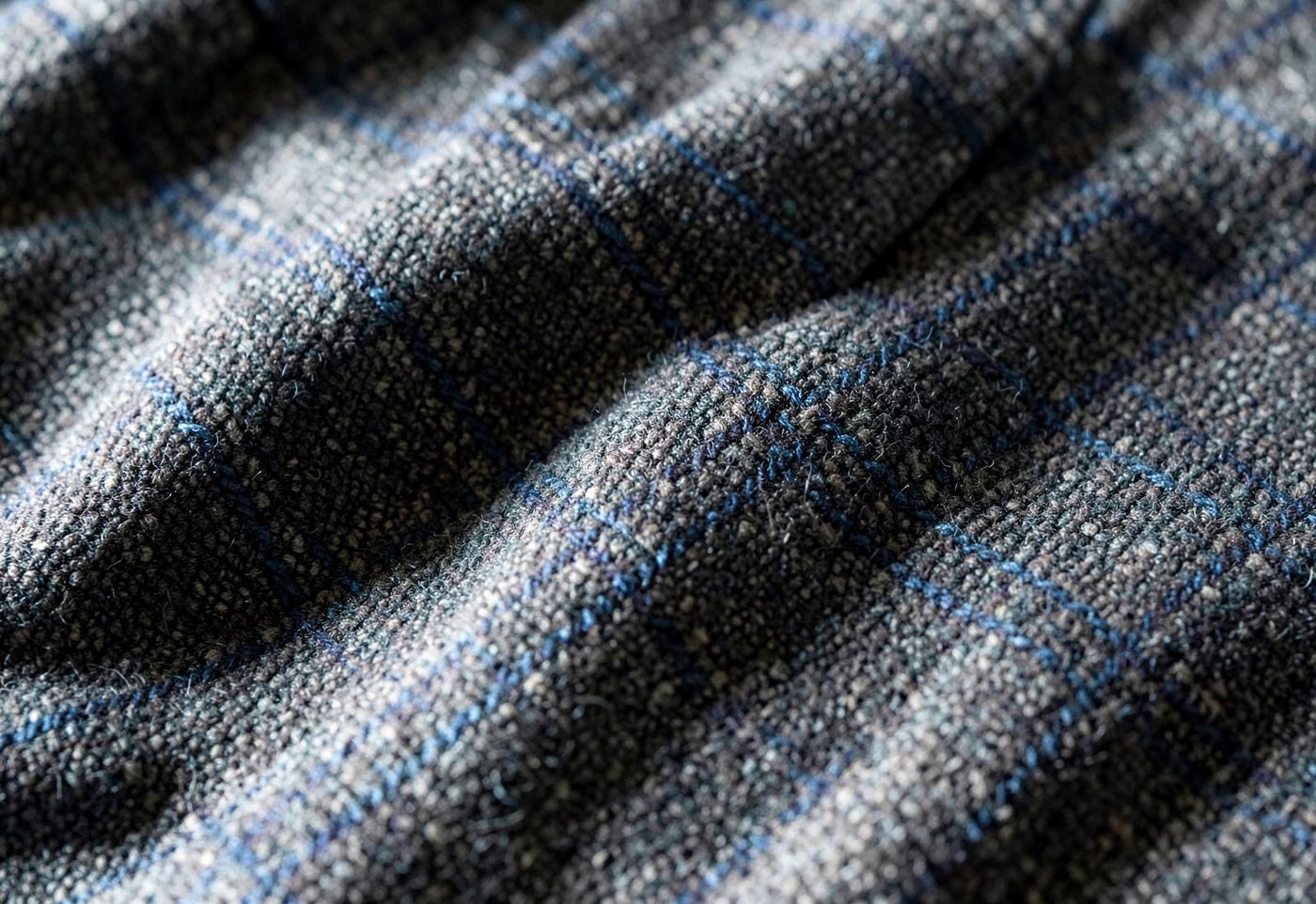
In short
Prince of Wales check is a large glen check, usually with a coloured overcheck. A small, low-contrast version in grey works as a business suit; a larger, higher-contrast check belongs on jackets, country suits and weekend tailoring.
What the pattern is
A glen check is built from alternating bands of small and large checks woven into the cloth. Add a faint coloured overcheck — often blue, wine or rust — and it becomes what most British mills sell as Prince of Wales.
Scale decides formality
- Small scale, grey on grey — a genuine business suit with more interest than plain cloth.
- Medium scale with a soft overcheck — the classic all-rounder for a suit or odd jacket.
- Large scale, high contrast — country tailoring, tweed jackets and weekend wear.
Cutting a check properly
Patterned cloth exposes poor cutting. The check should match across the back seam, run cleanly through the pockets and balance on the front edges. Larger repeats need extra cloth, so allow for it when the pattern is bold — this is where the difference between a well-cut and a carelessly cut suit is most visible.
Wearing it
Let the suit be the pattern. Plain shirts, a textured tie and simple shoes. If you want a second pattern, keep it much smaller or much larger than the check so the two do not clash.