Garment
Overcoats
In short
A Roomten made-to-measure overcoat is cut to your own measurements in your chosen coating cloth, with the length, closure and shoulder set to how you wear it — over a suit, a jacket or knitwear.
There are few garments that define autumn and winter style quite like a beautifully made overcoat. A good coat does much more than keep out the cold: it completes an outfit, creates a strong silhouette and, when made properly, can remain part of your wardrobe for many years. For Autumn/Winter 2026 we are seeing a welcome return to proper outerwear — longer lengths, strong but natural shoulders, substantial fabrics and classic coat designs interpreted in a more contemporary way. At Roomten we can create an overcoat around how you actually dress: a traditional Chesterfield worn over tailoring, an Ulster in a characterful Donegal tweed, a lightweight raincoat for commuting or a shorter car coat that works equally well with tailoring, knitwear and jeans.
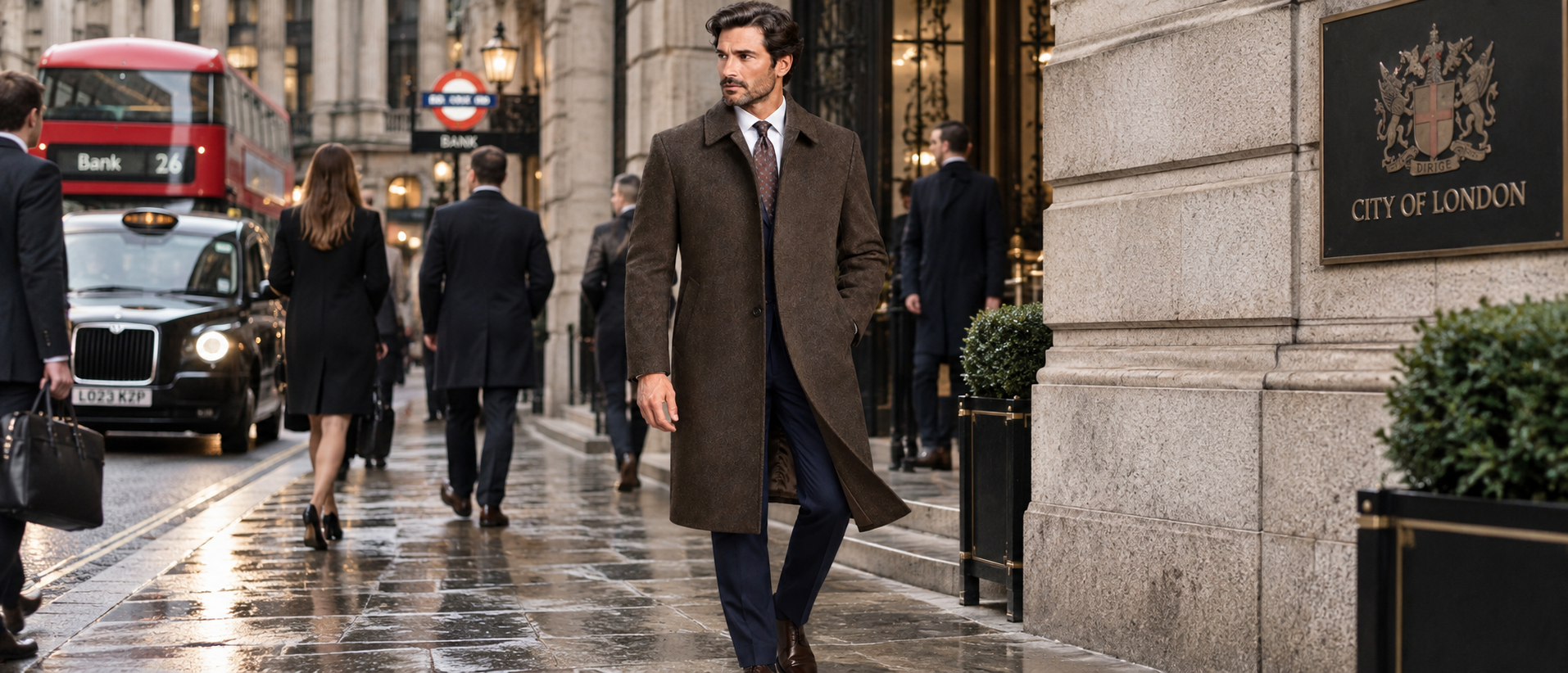
The styles
Overcoat styles we make.
Single-Breasted Chesterfield
The quintessential tailored overcoat. Clean, elegant and extremely versatile, traditionally cut around knee length or slightly longer with notch lapels, flap or jetted pockets and a straight or gently shaped silhouette. Navy and charcoal wool remain timeless; mid-grey, dark brown, camel and subtle herringbones offer something a little different. Wear it over a suit during the week, or with flannel trousers, knitwear and boots at the weekend.
Double-Breasted Chesterfield
For greater presence. The overlapping front provides additional warmth while creating a stronger silhouette through the chest and shoulders, and peak lapels give the coat a more distinguished appearance. Navy is exceptionally versatile; charcoal, brown herringbone and textured wool feel softer. For Autumn/Winter 2026 we particularly like longer double-breasted coats with a comfortable rather than overly fitted silhouette.
The Ulster Coat
If the Chesterfield is understated city tailoring, the Ulster is its more rugged country cousin — substantial, generously proportioned, with broad lapels, a double-breasted front and weather-resistant origins. It looks its best in cloth with texture and character: Donegal tweed, herringbone and heavy British or Irish coatings. Brown herringbone is a favourite, with olive, lovat, charcoal and oatmeal also working beautifully. We prefer it to finish below the knee for that distinctive sweeping line.
The Covert Coat
Originally a practical country coat, now one of menswear's most versatile pieces of outerwear. Shorter and slightly lighter than a traditional overcoat, it is particularly useful from autumn into winter. Traditional details include a fly front, notch lapels, a ticket pocket and rows of stitching at the cuffs and hem. Classic covert cloth is hard-wearing in fawn, tan, olive and brown; our contemporary version keeps the character while simplifying some of the detailing.
The Pea Coat
Shorter, double-breasted and traditionally made in substantial wool, with naval origins. The wide collar and lapels give it a strong appearance while the shorter length makes it easy to wear casually. Navy is the obvious classic, but charcoal, dark green, brown and textured wool completely change its personality. Try one with jeans, cords or flannels, a roll-neck and boots — made to measure, we refine the proportions so it feels sharp rather than bulky.
The Raincoat
British weather makes a good raincoat almost indispensable, but practical need not mean boring. A tailored raincoat is designed with the same attention to proportion and detail as an overcoat, in lighter technical or treated fabrics made to cope with wet weather. We particularly like longer raincoats with clean lines, comfortable proportions and enough room to wear over a jacket. Navy, stone, olive and tobacco are timeless; stronger colours make a contemporary statement.
The Waterproof Mac
Sometimes simplicity works best. A clean single-breasted front, minimal external detailing and a straightforward collar make the mac incredibly versatile — worn over a business suit without looking casual, and just as easily with jeans and knitwear. Modern waterproof and water-resistant cloths feel far more refined than traditional synthetic rainwear. A concealed front keeps the line clean, while slanted pockets, a throat latch and a removable lining add practicality.
The Car Coat
Sitting between a jacket and a traditional overcoat, the car coat finishes around mid-thigh — easy to wear, practical and particularly good if you spend time driving. Its simplicity is its strength: a clean single-breasted front, understated collar and well-placed pockets work over a suit yet look natural with jeans, chinos or knitwear. Cotton twill and weather-resistant cloths suit autumn; wool, cashmere blends and textured coatings make it a warm winter coat.
10+
Winters
A well-made coat in a good coating cloth is a decade-long garment, not a season's purchase.
Cloth
Choosing your overcoat fabric.
Lead time — Approximately 4–6 weeks
Cut over a jacket
The coat is measured over the clothing you will actually wear beneath it, so the chest and shoulder allow for a jacket or knitwear without adding bulk elsewhere.
Length and silhouette
Length changes the character of a coat entirely. A Chesterfield sits around the knee, an Ulster sweeps below it, while covert, pea and car coats are cut shorter. We set the length to your height and to the clothes you wear underneath.
Wool
The classic overcoat cloth. Pure wool provides warmth, durability and excellent drape, and depending on weight and weave it can produce everything from a refined city Chesterfield to a substantial country Ulster.
Cashmere and wool/cashmere
Cashmere gives an overcoat exceptional softness and a luxurious handle. Pure cashmere is beautiful, although a quality wool-and-cashmere blend offers a very good balance between softness, warmth, durability and practicality.
Herringbone
One of our favourite choices for winter coats. A subtle herringbone adds texture without making the coat difficult to coordinate — grey reads more urban, while brown, olive and oatmeal create a softer country feel.
Donegal tweed
Particularly suited to less formal overcoats. Its characteristic flecks and textured surface give a coat enormous depth and individuality, and it works especially well for Ulsters, raglan coats and relaxed double-breasted styles.
Covert cloth
Dense, durable and traditionally designed for outdoor use, covert cloth creates a slightly lighter and more structured coat. Its earthy colours make it particularly easy to combine with autumn tailoring.
Gabardine
For raincoats and transitional outerwear, gabardine is a superb option. Its tightly woven construction produces a smooth, clean appearance while offering useful protection from the elements.
Technical and waterproof fabrics
Modern performance fabrics give us considerably more options for elegant wet-weather clothing. Depending on the cloth we can create coats that are shower-resistant, highly water-resistant or fully waterproof while retaining a sophisticated appearance.
Detailing
Collar style, lapel, pockets, belt, vent and lining are all chosen at your appointment, along with the cloth. Prices are confirmed there against the cloth you choose.
Gallery
Recently cut overcoats.
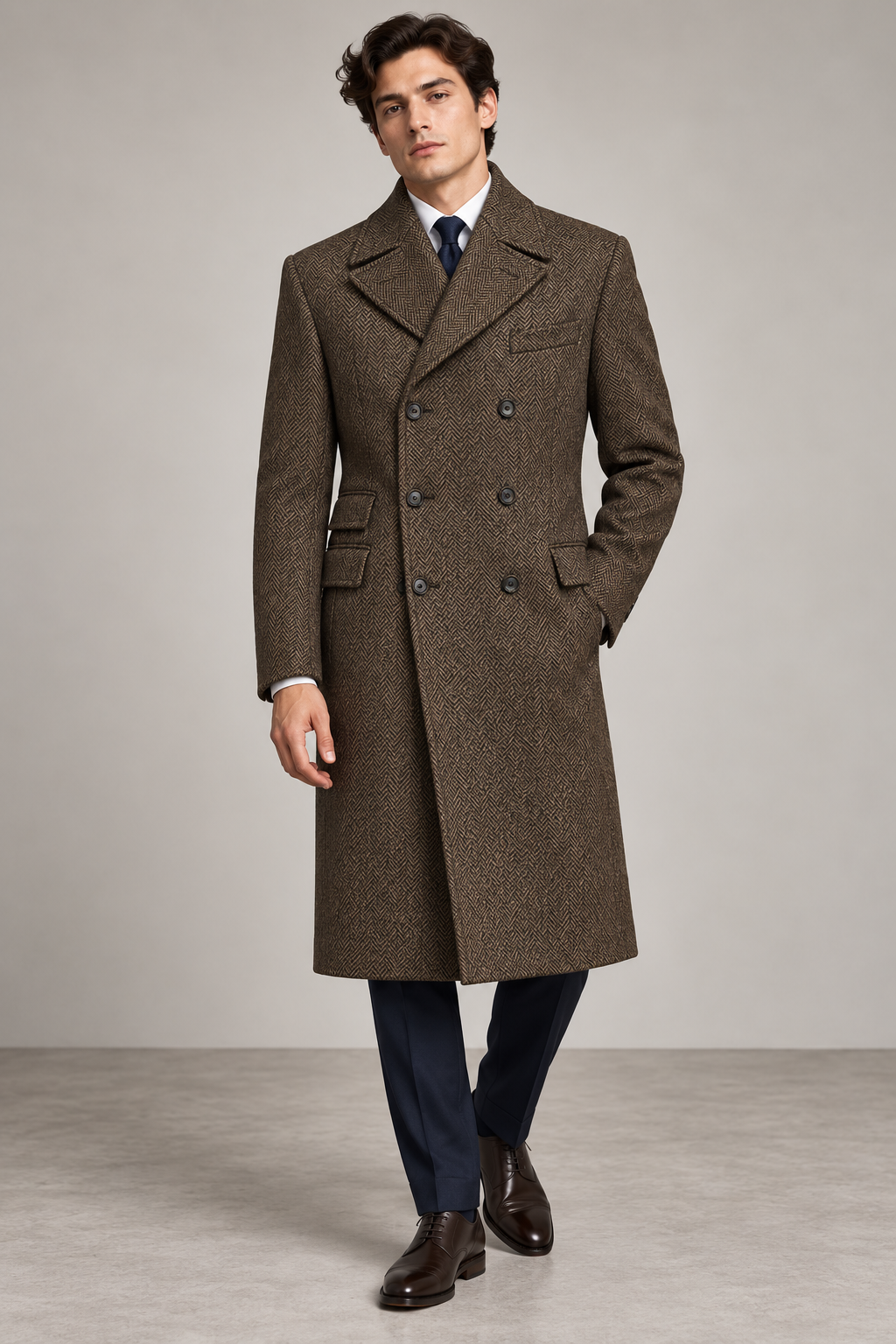
Ulster Coat Holland & Sherry Brown Tweed Fabric 8323030Overcoats 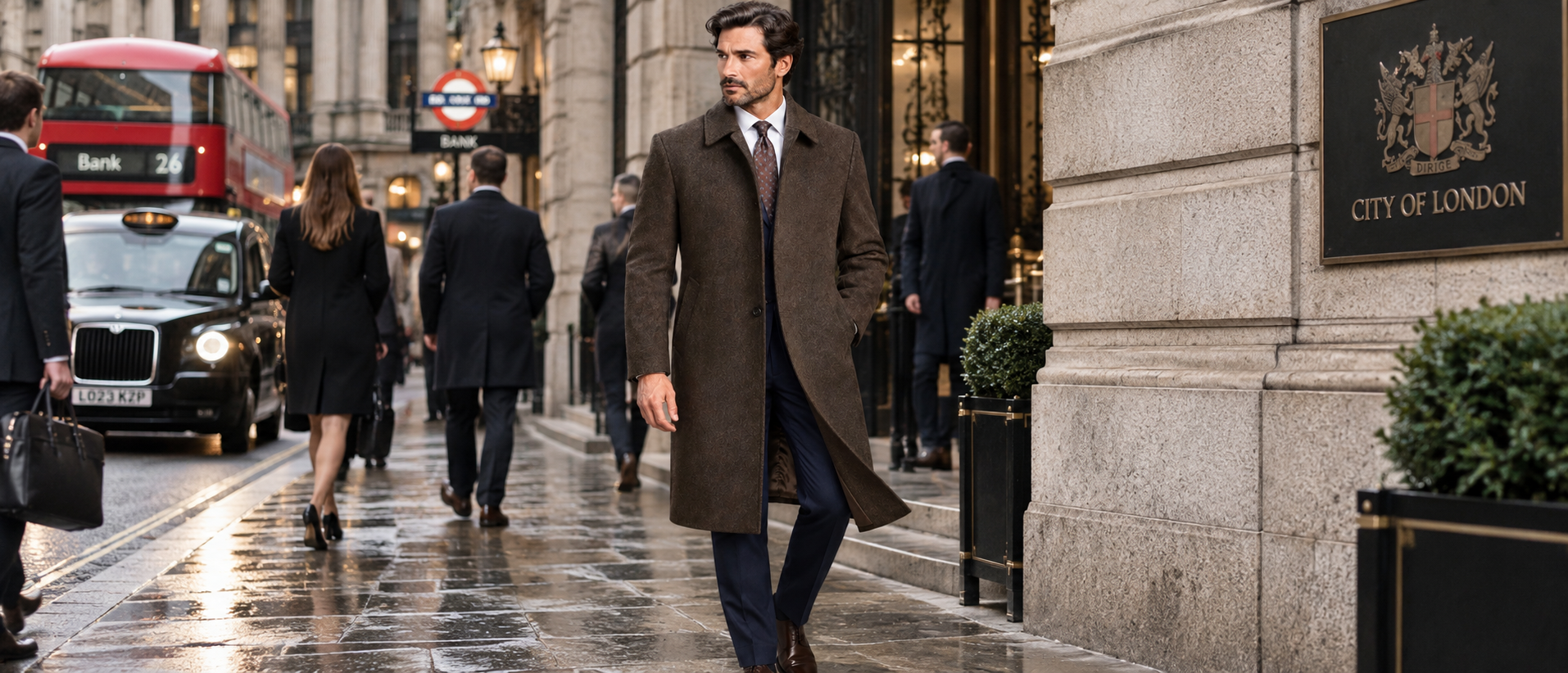
Brown Tweed Raincoat in the City of LondonOvercoats 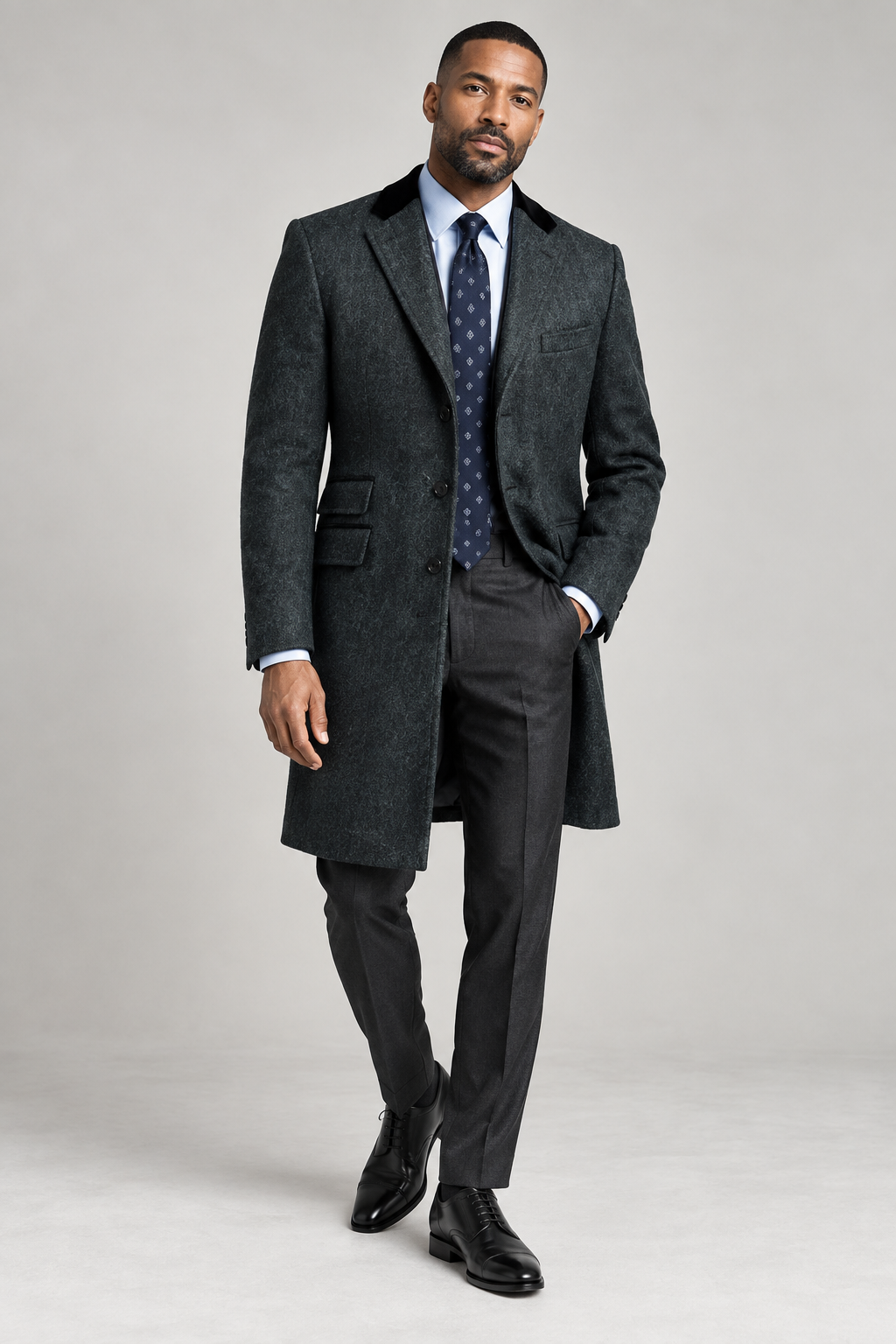
Chesterfield Overcoat Single Breasted Grey Holland & Sherry Wool 80% Cashmere 20% 9826010Overcoats 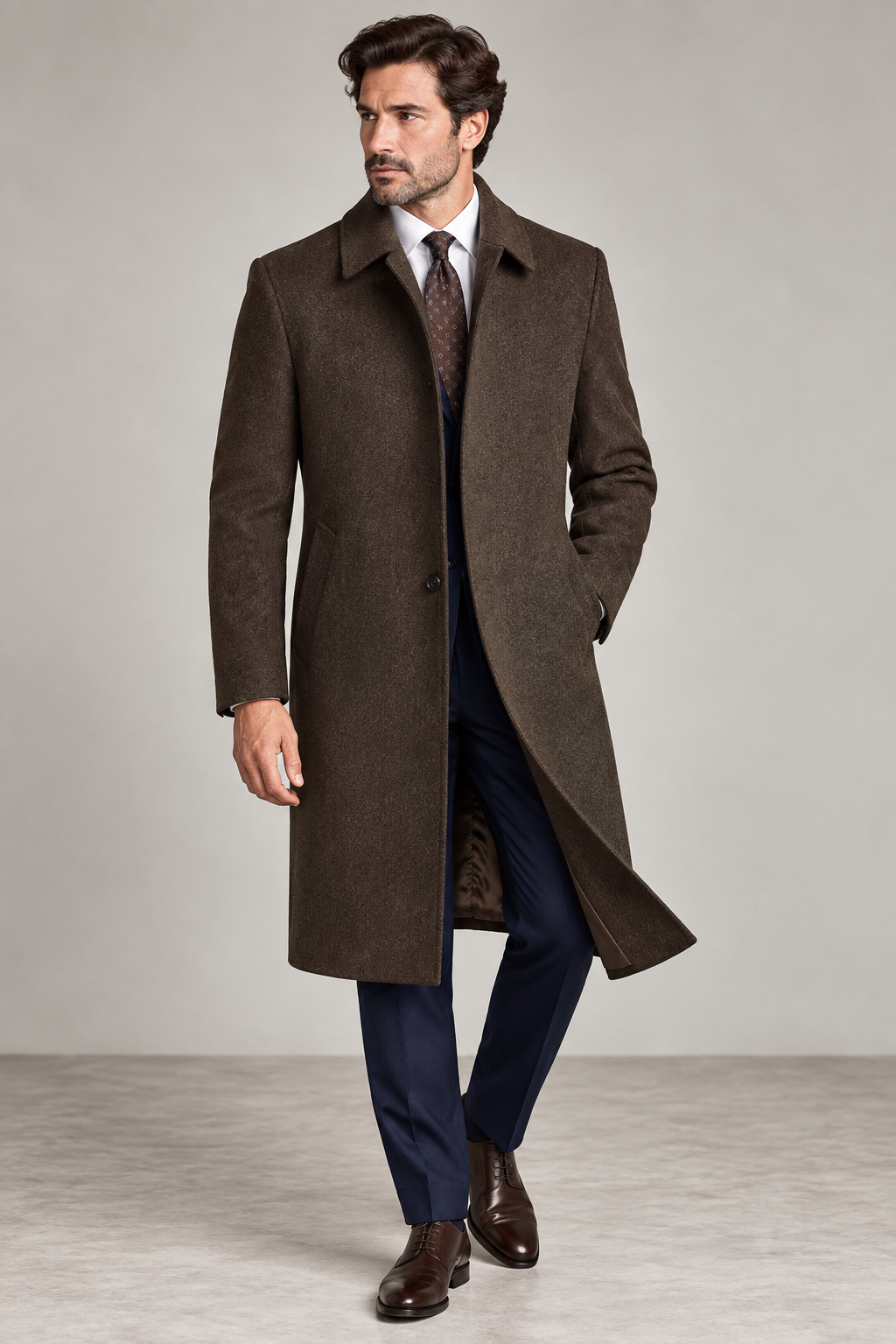
Raincoat style overcoat - Brown wool fabricOvercoats 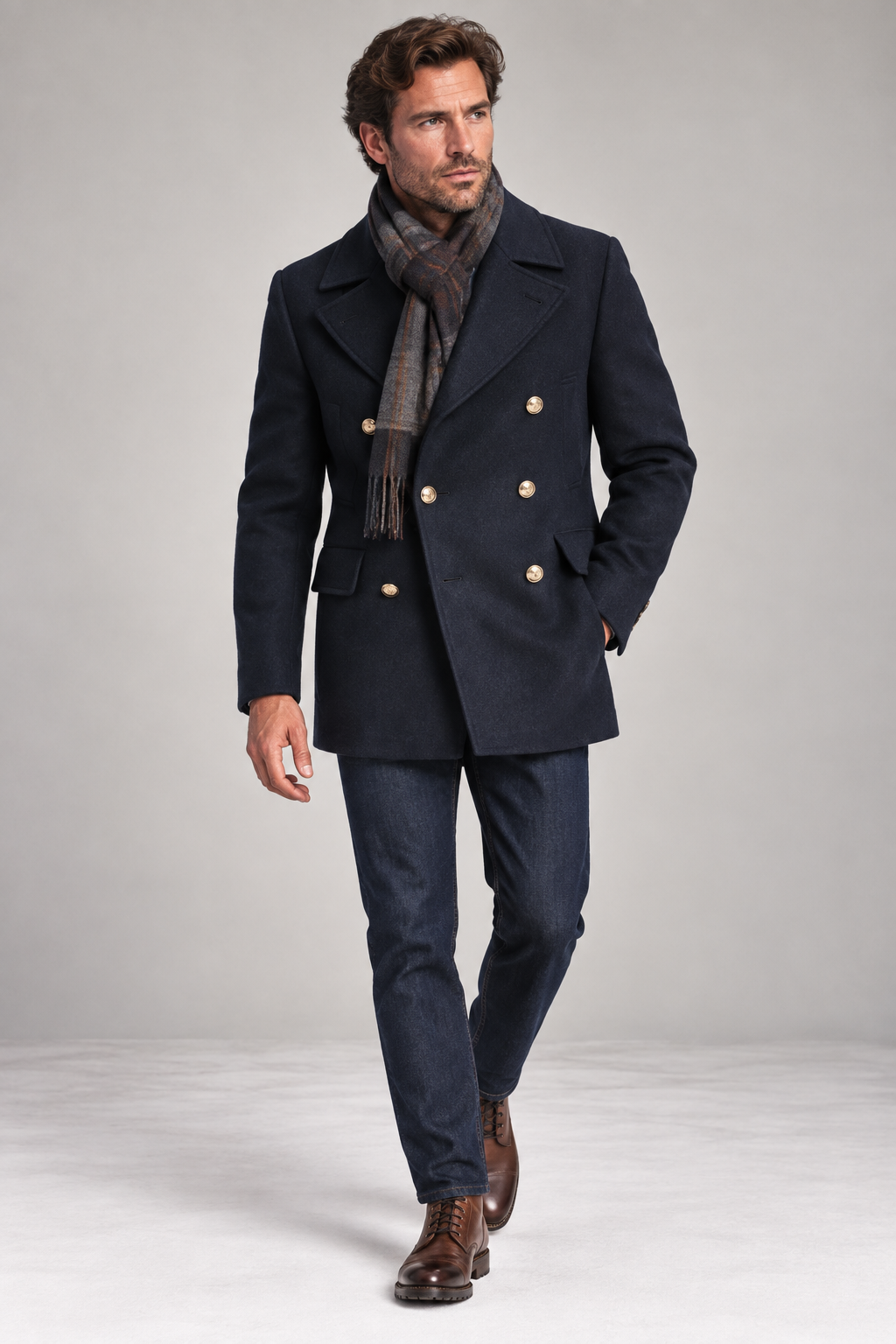
Navy Peacoat - Fabric Huddersfield Fine WorstedOvercoats 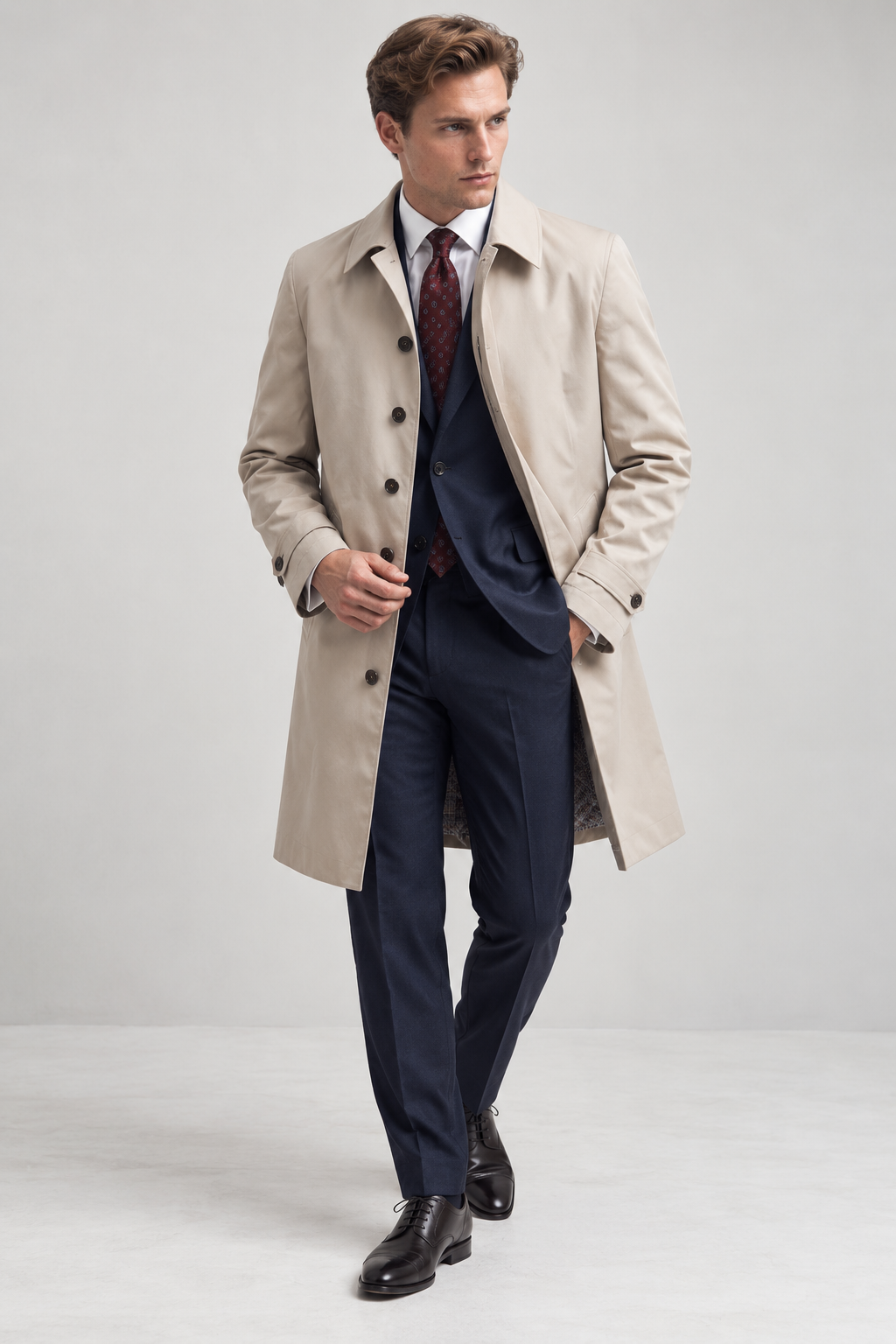
Raincoat - Fabric light weight cotton, water repellentOvercoats
From the journal
Reading on overcoats.
Style & Advice
The Chesterfield coat: the classic overcoat for tailoring
The Chesterfield is the formal overcoat cut to sit over a suit — what defines it, how to wear it and the cloths that suit it best.
Suit Style & Fit
Two-piece or three-piece suit: which should you choose?
When a waistcoat adds value, when it does not, and how the choice affects cost, formality and versatility.
Wedding Tailoring
Can a groom wear a three-piece suit?
Why a three-piece suit is one of the best choices for a groom, and how to wear it without looking overdressed.